
Behr Paint vs Benjamin Moore: Which One’s Worth It?
- Jun 25, 2025
- 12 min read
Behr paint vs Benjamin Moore: If you value pro-level durability, smoother application, and fewer repaints, Benjamin Moore wins. But for budget projects, Behr delivers decent results with wide availability. Match the paint to the project, not just the price tag.

Imagine two neighbors on the same sunny Phoenix block, both tackling long-overdue paint projects. One strolls into Home Depot and walks out with a few gallons of Behr Marquee, thrilled by the one-coat promise and budget-friendly price tag. The other heads to a local specialty paint dealer, pays a bit more, and leaves with Benjamin Moore’s Regal Select, confident it’s worth every extra penny.
Both are chasing the same goal: a smooth, beautiful finish that lasts. But as the rollers hit the walls and the weeks go by, the differences begin to show.
Price & Accessibility, Can You Afford to Care?

Price is often the first line item in any home improvement decision. Behr’s biggest advantage? It’s everywhere. Whether it’s 6 a.m. on a Sunday or 8 p.m. on a weekday, you can walk into virtually any Home Depot across the U.S. and grab a gallon (or three) off the shelf. It’s fast, easy, and you won’t need a paint specialist to get started.
Benjamin Moore, on the other hand, plays hard to get.
You’ll need to visit an authorized retailer, typically a local dealer or specialty paint store. While that may sound inconvenient, it comes with an underrated benefit: great guidance. These shops often employ color consultants and trained staff who actually understand how the product works beyond just reading the label.
Now, let’s talk about the scenario every DIYer dreads: you run out of paint halfway through a project.
With Behr, a quick trip back to Home Depot means you’re back in business within the hour. With Benjamin Moore, you may be stuck until the next business day, or worse, if your dealer doesn’t mix on-site.
So, does that make Behr the smarter choice? Not necessarily.
The concern most homeowners have is, “Are the expensive upgrades really worth it?” After all, Behr’s Premium Plus line starts around $30 per gallon, while Benjamin Moore’s Aura or Regal Select can climb north of $75. But here’s the kicker: Behr’s low-end doesn’t compete with Benjamin Moore’s high-end. It’s apples to oranges.
Benjamin Moore paints often require fewer coats, cover more surface per gallon, and last longer before fading or peeling, especially in harsh Arizona sun. So while Behr may look cheaper on the receipt, Benjamin Moore can offer better value over time, especially when factoring in labor, touch-ups, and repaints.
If you’re painting a rental, doing a budget flip, or tackling a quick refresh, Behr might do the trick. But if you want fewer headaches, richer color, and a finish that actually lasts? You may want to dig a little deeper into your wallet.
One-Coat Wonder or Repeat Offender? Coverage & Application Face-Off
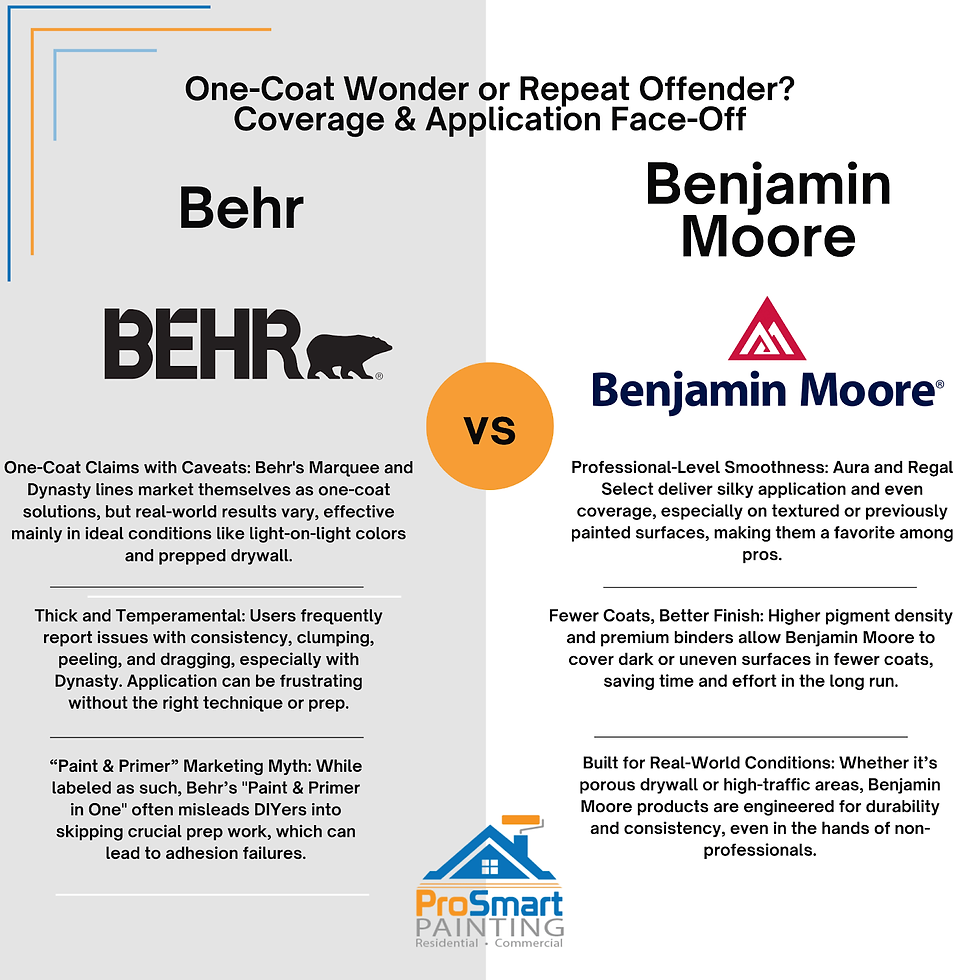
When it comes to paint performance, the difference often reveals itself in the very first stroke. On paper, both Behr and Benjamin Moore claim impressive coverage stats, especially with their flagship lines:
Behr Marquee and Dynasty
Benjamin Moore’s Aura and Regal Select
Benjamin Moore tends to apply smoother, require fewer coats, and produce a more even finish, especially in challenging conditions like textured walls or deep color transitions. Professional painters routinely favor Aura for its buttery application and Regal Select for its balance between premium performance and price.
Behr, particularly its Marquee and Dynasty lines, markets itself with bold claims of one-coat coverage. And yes, under ideal conditions (think: light color over light color, perfectly prepped drywall), it can sometimes deliver. But that’s the exception, not the rule.
Many users report a different story.
One homeowner shared that even a 2x2’ wall sample of Behr Dynasty resulted in clumping and peeling, despite being applied correctly. Others described the paint as overly thick, difficult to roll, prone to drag, and inconsistent in texture. One described Dynasty as “chunky,” another said it “peeled right off after drying.”
So what’s going on?
Part of the issue lies in the myth of “Paint & Primer in One.” While it sounds like a shortcut, it’s more of a marketing term than a technical truth. No matter what the label promises, primer still matters, especially on raw drywall, stained surfaces, or glossy finishes.
And that’s where professional standards come in. As ProSmart Painting puts it: painters never paint over unprepped surfaces. Every job starts with meticulous prep, whether that means sanding, caulking, or applying a separate bonding primer. Why? Because shortcuts cause failures, no matter which paint brand you use.
Coverage is about consistency, adhesion, and durability. Benjamin Moore wins in that department not just because it’s thicker or more pigmented, but because it’s engineered to perform like a pro, even in the hands of a novice.
Durability & Longevity, Will It Last or Let You Down?
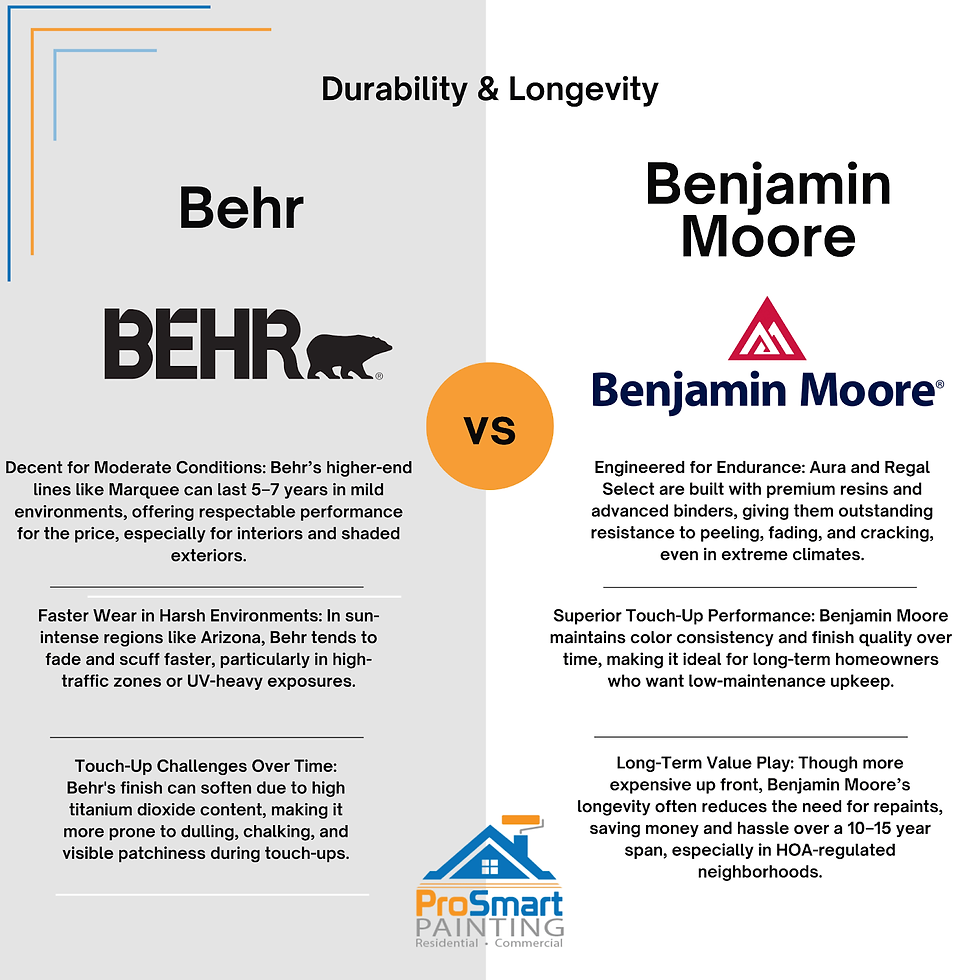
Painting your home is an investment. And when you're shelling out for gallons of color and hours of labor. It’s the difference between repainting in five years, or fifteen.
In the durability ring, Benjamin Moore takes the lead. Its premium lines like Aura and Regal Select are formulated with advanced binders and high-grade resins that resist fading, peeling, and cracking, even in punishing environments like Arizona’s sun-drenched exteriors. It’s also one of the few brands that maintains touch-up integrity over time, meaning small nicks and dings won’t force a complete repaint.
Behr, to its credit, holds up reasonably well, especially with its Marquee exterior line. Under moderate conditions, users report 5–7 years of solid performance. But here’s where reality creeps in: Behr may start to lose its luster, show wear faster, or struggle with touch-ups sooner than expected, especially in high-traffic areas or under UV-heavy exposure.
Why the discrepancy?
It partly comes down to materials. Behr paints often achieve brightness and coverage using high levels of titanium dioxide (TiO₂), a common white pigment. But too much TiO₂ can create overly soft finishes, which some pros argue leads to quicker scuffs and chalking. One customer noted, “Behr’s whites looked great at first, but turned dull and soft after just a season.”
Now let’s look at this through a practical lens, say, an HOA-mandated exterior repaint.
This is a common scenario in Phoenix neighborhoods, where homeowners are required to repaint once fading is visible. If you choose a cheaper paint that needs retouching sooner, you may find yourself repeating the whole process within just a few years. In contrast, Benjamin Moore’s longer lifespan can delay those repeat expenses and reduce the total cost over time.
Bottom line: if you want your paint job to stand the test of time, survive HOA scrutiny, and reduce the likelihood of costly
Finish, Sheen & Color Matching. Looks Aren’t Everything

Paint is about how that color feels on the wall. The finish, the sheen, and the way it reflects light can dramatically affect the mood of a room. And if you’ve ever been caught off guard by a paint that looked completely different once dry, you already know: looks can deceive.
Benjamin Moore leads the pack when it comes to color richness and finish control. With over 3,500 shades in its lineup and highly nuanced undertones, it’s a dream for designers and homeowners who want their colors to look just right, morning, noon, and night.
Behr, meanwhile, takes a more streamlined approach. Its lineup sits closer to 1,400 colors and leans heavily into current trends and popular palettes. Their online visualization tools and Home Depot accessibility make it a favorite among DIYers who value convenience and speed.
But there’s a hidden snag that trips up even seasoned renovators: sheen inconsistency.
Here’s a common surprise: someone buys Behr in “eggshell” expecting a soft, low-luster finish, only to find it looks almost glossy on the wall. Why? Because Behr’s “eggshell” is glossier than Benjamin Moore’s equivalent, often closer to BM’s “pearl” or even low satin.
This seemingly small mismatch leads to big problems. Walls turn out shinier than expected. Light reflects in weird ways. And in worst-case scenarios, homeowners end up repainting entirely, burning money and time just to fix a finish that didn’t behave the way it should.
So why do finishes behave so differently across brands? Because there's no universal standard for sheen levels. Each brand defines its categories a bit differently. One company’s “matte” may reflect another's “eggshell.” That’s why color-matching between brands is about sheen calibration, too.
This is where Benjamin Moore’s precision really shines. Designers trust it not just for color, but for predictable finish performance, especially on large surfaces or spaces with complex lighting. And for pros doing multi-room projects or needing touch-ups months later, that consistency matters.
Pro tip: Before choosing a finish, test it in the room under light. And if you’re switching brands mid-project? Double-check how your chosen sheen translates. Otherwise, you might find yourself repainting, not redecorating.
What the Pros Say, Secrets They Won’t Share at Home Depot
There’s a quiet rule in the painting world: if the pros won’t use it, neither should you. And when it comes to Behr vs. Benjamin Moore, that rule becomes a bit louder.
Ask any experienced interior designer or licensed painter, and you’ll notice a pattern. Benjamin Moore is the go-to. It’s not just about prestige, it’s about performance. Professionals rely on paints that deliver consistency, longevity, and ease of application across dozens (sometimes hundreds) of projects. And Benjamin Moore checks those boxes.
What you see at retail stores isn’t always the same product pros get from dedicated paint suppliers. Brands like Behr and even Sherwin-Williams offer versions specifically formulated for consumer sales, sometimes thinner, sometimes lower in resin content, and often optimized for shelf life rather than job-site performance.
That’s why you rarely see pro painters shopping at Home Depot. Instead, they rely on dealer-based brands like Benjamin Moore or Dunn-Edwards, where they can get trusted formulations, consistent tinting, and support from trained staff who actually know paint.
Take ProSmart Painting, for example. We exclusively use high-end Dunn-Edwards paints, a premium product line designed for professional use, not for budget shoppers. And they never cut corners.
Choosing the wrong brand is a liability. Inferior products can lead to touch-up disasters, uneven finishes, or client complaints. And for a pro trying to build trust and repeat business, that’s a risk not worth taking.
So while big-box paints may work in a pinch, they’re not the paints professionals stake their names on.
Environmental Factors, Is Your Paint Breathing Easy?
Paint fumes can affect the air your family breathes for weeks after the project is “done.” That’s why today’s top paint brands are racing to deliver formulas with lower VOCs (volatile organic compounds), fewer odors, and safer ingredients. But not all “eco-friendly” labels are created equal.
Let’s start with Benjamin Moore.
Their Eco Spec and Aura lines are both zero-VOC and LEED-compliant, meaning they meet strict environmental standards set by organizations like GREENGUARD and the U.S. Green Building Council. These paints don’t just limit off-gassing, they’re designed to improve indoor air quality, making them a top choice for nurseries, bedrooms, and allergy-sensitive households.
Behr’s Premium Plus line also earns points here. It’s zero-VOC and budget-friendly, making it one of the most accessible low-emission paints on the market. For families doing a DIY refresh on a tight budget, it’s a solid choice, especially for lower-traffic areas or outdoor projects where exposure is minimal.
But here’s where the distinction matters: zero-VOC doesn’t mean zero odor or zero chemical content. Some paints still contain additives or tint bases that emit low-level fumes, even if the base formula meets the “zero-VOC” threshold. Benjamin Moore’s Aura, for instance, is specifically engineered for low odor and faster curing, which means it becomes safe to inhabit sooner, especially important for households with pets or children.
Another consideration?
Indoor vs. outdoor use. Outdoor paints may be more forgiving in VOC levels since open air helps dissipate fumes quickly. But when you’re painting a living room, kitchen, or child’s bedroom, you’ll want a formula designed for indoor safety, not just labeled for it.
So if health and air quality are top priorities, Benjamin Moore’s premium lines still lead the pack. But if you're looking for an affordable, safe, and accessible option with decent environmental standards, Behr Premium Plus deserves a spot on your shortlist.
Either way, don’t compromise your air for your aesthetic. A beautiful room should feel good to breathe in, not just good to look at.
Cabinets, Trim & Trouble Areas, The Detail Work Tells the Truth
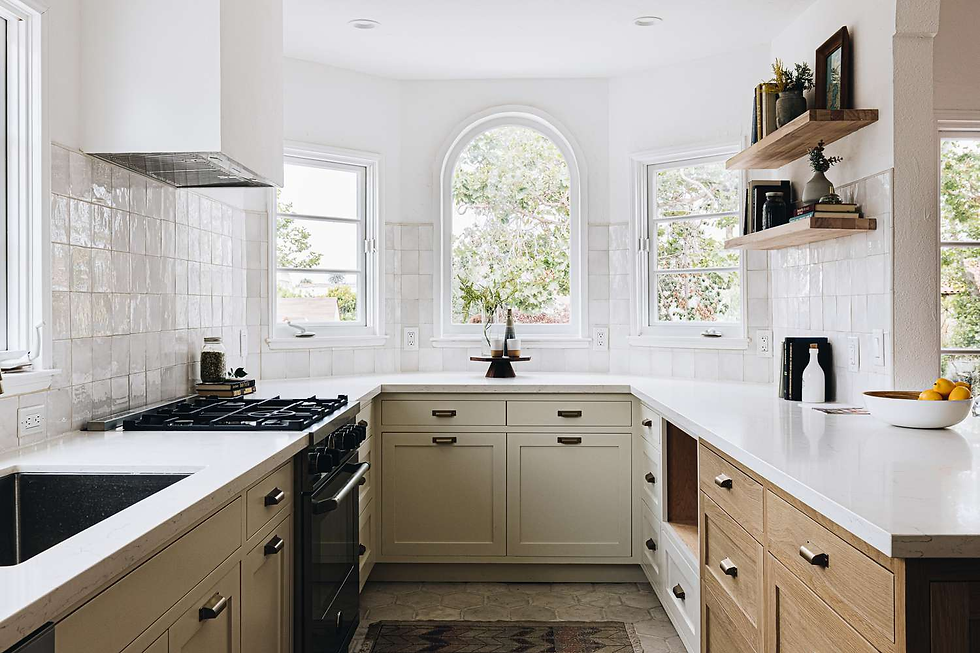
Walls are forgiving.
Cabinets and trim? Not so much.
These areas demand precision, durability, and a finish that looks flawless under scrutiny. That’s where the battle between Behr and Benjamin Moore takes on a whole new layer, literally.
Let’s start with Benjamin Moore’s Advance line. It’s widely regarded by professionals as one of the best waterborne alkyd paints on the market. Why? Because it levels like an oil-based paint, leaving behind a silky-smooth, brush-stroke-free finish, but without the harsh fumes or long drying times associated with traditional oils. It’s ideal for cabinets, doors, baseboards, and high-touch surfaces where durability and aesthetics both matter.
Behr also offers a Cabinet & Trim Enamel, positioned as a budget-friendly option for kitchen and bath refreshes. It’s thick, quick-drying, and decent for small projects, but it doesn’t level as well. More importantly, many pros report that under daily wear, think heat, moisture, or constant opening and closing, Behr’s finish can yellow, scuff, or even chip faster than expected.
Cabinet paint needs to hold up against splashes, fingerprints, cleaning products, and greasy hands. And if it fails, it’s not just a cosmetic issue, it’s a do-over.
That’s why we don’t compromise. For cabinets, trim, and high-demand areas, we recommend only premium lines like Benjamin Moore Advance or Dunn-Edwards Aristoshield. Why? Because they cure harder, resist yellowing, and leave a showroom-level finish that lasts for years.
If you’re upgrading a kitchen or bathroom, don’t cut corners on the areas that matter most. The right paint here is the difference between an amateur job and a professional result.
Hidden Costs, What Most Paint Comparisons Don’t Tell You
On the surface, paint seems like a simple price-per-gallon equation. But anyone who’s actually completed a paint job, especially a big one, knows better. It’s the time, the prep, the rework, and the callbacks that drive up the true cost of a project.
Let’s break it down.
Behr paints like Marquee and Dynasty advertise one-coat coverage. And sure, under ideal conditions (flat, white walls and perfect prep), you might get away with it. But here’s the catch:
Is one coat really enough?
That question pops up often, and the answer is: rarely. Painting over dark colors, textured walls, or moisture-prone rooms, even premium Behr lines often need a second coat to achieve proper coverage and sheen consistency. And when that happens, your “budget-friendly” option starts to get expensive in a hurry.
Now compare that with Benjamin Moore’s Aura or Regal Select. They’re engineered to offer superior hide and richer pigmentation, meaning fewer coats, less labor, and faster turnaround. For professional crews, that could mean finishing a job a day early. For DIYers, that means getting your weekend back.
And then there’s the issue of callbacks. Paint that scuffs easily, peels early, or touches up poorly doesn’t just cost money, it costs trust. It also means hiring someone to fix it… or doing it all over again yourself.
This is why ProSmart Painting approaches every job with long-term value in mind, not short-term savings. In fact, they don’t even ask for a deposit up front. Call us for more information.
So before you choose a paint based solely on sticker price, remember:
The cheapest gallon isn’t always the cheapest choice. The right paint, paired with the right team, saves you from the hassle of doing it twice.
Which Paint Is Actually Better?
So, who wins the paint-off?
Behr or Benjamin Moore?
The truth is, it depends on your priorities.
If you want lasting value, superior finish quality, and peace of mind that your paint won’t peel, fade, or disappoint six months down the road, Benjamin Moore is the clear winner. It’s engineered for durability, trusted by professionals, and consistently delivers results that go beyond expectations, especially in detail work, color matching, and high-touch surfaces.
But if you’re refreshing a space on a tight timeline and tighter budget, say, prepping a rental, flipping a house, or doing a quick basement redo, Behr can absolutely get the job done. It’s accessible, affordable, and offers solid results if used with the right prep and expectations.
The key takeaway?
Match the paint to the project, not the brand to your budget. Some jobs deserve the highest quality finish and long-term performance. Others just need a coat that looks good enough until the next update.
Whatever you choose, know that success depends not just on the name on the can, but on how you prep, apply, and care for what’s underneath.
Want to Skip the Headache?

Choosing paint is hard enough. But applying it correctly, especially under the intense Arizona sun, strict HOA rules, or inside high-wear spaces like kitchens and baths, adds a whole new layer of stress.
If you want pro-level results without the hassle, skip the guesswork and go with a pro.
We protect your investment. We use premium-grade materials like Dunn-Edwards, skip the industry shortcuts (no watered-down paint here), and back every job with a zero-deposit, pay-when-it’s-done policy. That means no risk, no surprise costs, and no compromise on quality.
Whether you're worried about fading stucco, finicky HOA color requirements, or getting a glass-smooth cabinet finish that doesn’t chip next month, we’ve seen it all, and we know how to handle it right the first time.
Ready to talk color, strategy, or just need a second opinion?
Schedule your free quote now and let’s make your next paint job the easiest decision you’ll ever make.

Frequently Asked Questions (FAQ)
Is Behr paint good quality for the price?
Yes, Behr offers good value, especially for DIYers tackling budget-friendly projects. While it may require more coats and careful prep, its premium lines like Marquee and Dynasty can deliver solid results under ideal conditions.
Why do professionals prefer Benjamin Moore over Behr?
Pros choose Benjamin Moore for its consistency, durability, and smoother application. It covers better, lasts longer, and performs well in high-traffic or harsh environments, saving time and callbacks down the road.
Does Behr really cover in one coat like it claims?
Only under perfect conditions, like painting a light color over a light base with a well-prepped surface. In most real-world scenarios, even Behr’s “one-coat” lines typically need two coats for even coverage and proper sheen.
Which brand is better for cabinets and trim?
Benjamin Moore wins here, especially with its Advance line, known for leveling beautifully and resisting scuffs, yellowing, and peeling. Behr’s cabinet paint is decent for small DIY jobs but tends to wear faster under daily use.
What’s the main difference in finish between the two?
Benjamin Moore offers more nuanced sheens and better sheen consistency across colors. Behr’s finishes tend to be glossier than expected, which can lead to surprises if you're trying to match an existing look.


Comments