
Should You Paint Trim the Same Color as Walls?
- Jun 20, 2025
- 4 min read
Yes, you can paint trim the same color as your walls, and when done right, it creates a modern, seamless look that makes rooms feel bigger, calmer, and more cohesive.

Why Homeowners Are Choosing This Look:
Simplifies small or oddly shaped rooms to feel more spacious
Creates a soft, modern aesthetic with fewer visual breaks
Shifts focus to furniture, light, and textures, not moldings
Hides aging or uneven trim with one clean, unified color
Use sheen contrast (matte walls + satin trim) for subtle definition
At ProSmart Painting, we’ve helped countless homeowners modernize their spaces with this exact technique. We understand the balance between design and durability, and how to get both with the right prep, sheen, and color choice.
Keep reading to find out when same-color trim works best, where it doesn’t, and how to pull off the look like a pro.
Where This Approach Works Best (and When It Doesn’t)

Painting trim the same color as the walls can be a powerful tool, but it is not a universal solution. It thrives in certain settings and falls short in others depending on the architecture, design style, and overall intent of the space.
This technique works best in modern homes, where clean lines and uninterrupted surfaces are a defining feature. It’s also ideal for narrow hallways, where contrast between walls and trim can make the space feel chopped up and confined. Tall-ceilinged rooms benefit too, same-color walls and trim emphasize the height and airiness without creating visual breaks. Minimalist and Scandinavian interiors are perhaps the most obvious match for this method, where simplicity, cohesion, and function lead the design.
However, caution is advised in older homes with heavy or ornate molding. In those spaces, trim is often a key decorative feature, and painting it the same color as the walls may make the room feel dull or erase important character. Similarly, maximalist or traditional interiors often rely on contrast and layered detailing. Eliminating trim contrast in these rooms can undermine the richness those styles depend on.
Choosing the Right Paint Sheen for Trim & Walls
When painting your trim the same color as your walls, one of the most important decisions is not the color, it’s the sheen. Choosing the right finish helps preserve the subtle architectural details while maintaining a clean, unified appearance.
For walls, matte or eggshell finishes are ideal. Matte creates a soft, non-reflective surface that hides imperfections and adds warmth. Eggshell offers a touch more durability and is slightly easier to clean, making it a popular choice in living areas and bedrooms.
For trim, satin or semi-gloss finishes work best. Satin adds a smooth, subtle shine and holds up well in moderate-traffic areas. Semi-gloss is more reflective and durable, which makes it ideal for baseboards, doorframes, and window trim that take more wear.
Pro insight: Let the sheen, not the shade, define the architectural details. Using the same color in different finishes creates visual depth without breaking the monochrome look. Trim still stands out subtly in the light, thanks to its glossier surface, but doesn’t interrupt the overall color flow. If you’re unsure which sheen combination will work best in your space, speak with a local painting specialist for tailored advice.
Step-by-Step: How to Paint Walls and Trim the Same Color
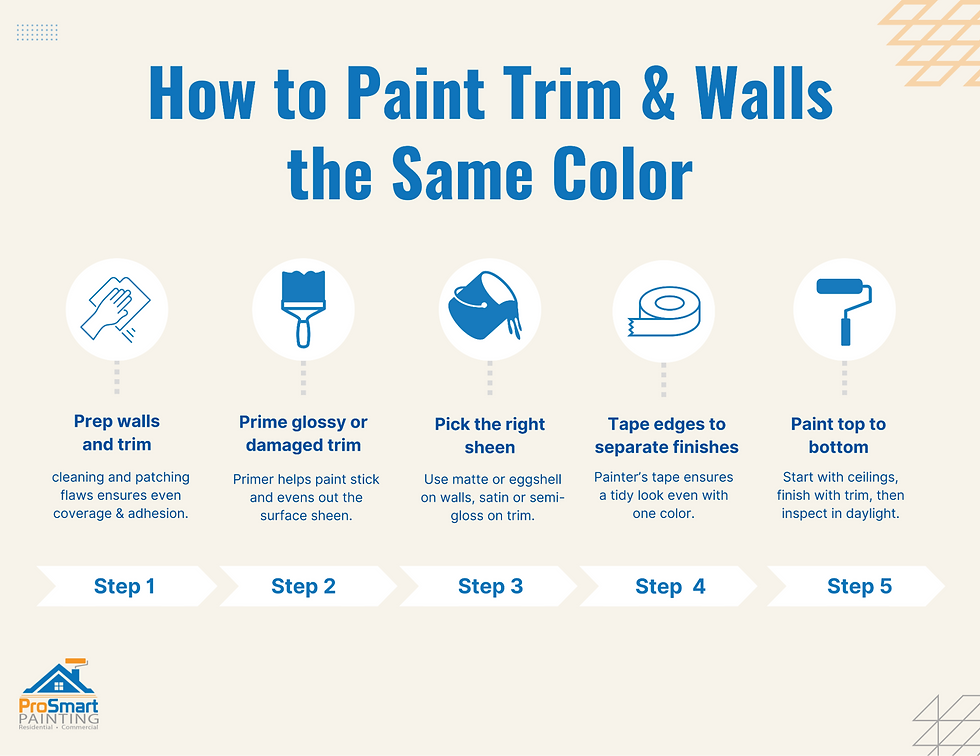
Achieving a polished, monochrome look choosing a color and attention to prep, materials, and sequence will ensure the final result looks clean, cohesive, and professional.
Clean and prep all surfaces thoroughly
Start by removing dust, grease, and old paint buildup from both walls and trim. Sand down imperfections and fill any gaps or dents with caulk or spackle. A clean, smooth surface is essential for even coverage and proper adhesion.
Prime if needed (especially on older or damaged trim)
If you're painting over stained wood, glossy finishes, or aged trim, use a primer designed to seal and level the surface. This will help your paint adhere better and create a consistent base for color and sheen.
Choose appropriate sheen for each surface
Use eggshell or matte for walls and satin or semi-gloss for trim. This maintains the same hue throughout the room while subtly differentiating surface types through light reflection.
Use painter’s tape to maintain sharp lines
Even when using the same color, clean edges make the final result feel more intentional and tidy. Tape off the ceiling, baseboards, and door frames if necessary, especially when working with varying sheens.
Paint in this order: ceiling > walls > trim > doors
Starting from the top down helps avoid drips and keeps the paint layers clean. Trim should be painted after the walls to ensure a crisp line and full coverage along the edges.
Touch up and check under different lighting conditions
Natural and artificial light can dramatically affect how your paint looks. Once dry, walk through the room during the day and at night to identify areas that may need another coat or slight touch-up. Subtle sheen variations may appear differently depending on the time of day, so it's worth checking the finish from multiple angles.
With patience and proper execution, painting your trim and walls the same color can elevate the entire room, making it feel thoughtful, modern, and beautifully balanced.
Should You Match Trim to Your Walls?

Matching your trim to your wall color is more than a passing trend, it’s a design choice that can simplify your interiors, modernize your aesthetic, and visually expand your space. By removing visual boundaries and allowing surfaces to flow seamlessly, you create a more peaceful and intentional environment.
That said, success depends on the details. Test different sheen combinations, try paint samples on both walls and trim, and observe how they respond to your space’s lighting throughout the day. A flat finish may feel cozy in one room but flat in another, while subtle sheen shifts can add elegance without disrupting harmony.
Above all, remember that design is personal. What works in one home might not in another, but when applied with care and confidence, matching trim and wall color can create a timeless look that’s both subtle and striking.
Thinking of trying this look in your space? Consult a local paint professional to help you choose the right color, sheen, and application strategy for long-lasting, beautiful results.


Comments